Saturday, 7 May 2016

I am a Wildcrafter

I began writing about wildcrafting yesterday and although I got a lot of my ideas into the writing, I felt like something was missing.   

Plantain, a bit mowed, but vibrant and
waiting to be harvested. 
Then an apprentice graduate of mine came to pick me up and she and I and two small children went out to harvest plantain from our church’s grassy meadow.  I felt like we were done and had gotten what I needed for infused oil but it appeared that the plantain was not done with us.  It wanted us to keep picking.  It was so happy to have us harvesting its leaves.  

What I want to communicate in this essay about wildcrafting is how to be respectful of the earth and the plants, how to not over harvest etc.  And……that the plants want us to harvest them.   They are calling us to them.  They are waiting and waiting for us to notice them and see what gifts they have for us.  

I am a wildcrafter.  I harvest plants mostly from my garden and on our land to make herbal preparations.  I utilize these preparations to make salves and lotions, vinegars, sprays, tinctures.  I have a small company where I sell products.  

I also make herbal preparations for use by myself and my husband.  

I have been noticing that more and more people are interested in harvesting wild plants for food and medicine.  I have grown concerned that it is getting a little out of hand.  

I feel very protective of our natural resources, our wild plants and their ability to continue.  

I hear a lot of people on herbal forums asking if this plant or that plant is medicinal.  Can I work with this plant?  What can I do with this?  

I understand the excitement about finding out you can gather and eat food right from the forest or the meadow…you don’t have to go to the store.  

I can understand the amazing idea that you can heal yourself with wild plants…you don’t have to go to the doctor.  

There is a respectful way to wildcraft plants.  There is a sacred way to harvest.  

Here is a list of things that I have learned to help me be a partner with plants instead of a taker of plants: 

Get to know the plants that you wish to harvest.  Spend time with them observing them.  Breathe with them and listen and see what wisdom they have for you.  This isn’t just 15 minutes before harvesting that you are going to do this.  I recommend, taking a year to get to know plants to which you are drawn, just a few.  

Find someone from which to learn practices of connecting with the plants.  Help them harvest so that you can learn respectful ways.  

Plantago lanceolata garbled and
ready for infused oil.  
Ask permission before harvesting.  If you are in the wild, find out if this is a place you are permitted to harvest.  

Ask permission of the plant.  Wait for an answer.  Only harvest if you get a yes.  

When your harvesting is complete, say thank you.  

Don’t clear cut.  I instruct my apprentices and students to pick here and there so it doesn’t even look like anything has been touched.  

Only harvest if there is an abundance.  If there is very little, leave it.  If there is just a moderate amount, only take what you need.  

Be very careful to not disturb the landscape when you are harvesting.  

Tend your gathering places.  What is needed for these plants to continue?   

Don't give away your gathering places.  I will take apprentices and students to my gathering places at times, but I will not tell someone where to go to find a plant.  

Understand that when you are digging up a plant by the roots, you are giving death.  

Even though I said it before, I think this is the most important thing.  Gratitude.  Be thankful and gracious with the earth and the plants.  

A story of wildcrafting:  
Wild Roses in our little meadow yard. 
Today I went out in my yard and gathered wild rose leaf and flower to make wild rose infused oil.  When I looked our over the thicket of wild roses, it appeared there were so many to harvest.  And yet, when I got down and stood before the roses, there weren’t that many.  I looked and I listened and I knew to harvest this one and that one.  I knew where to cut and I knew when to stop.  

I am pretty confident now as a wildcrafter.  I have learned to accept my vulnerability as part of the process.  I felt this overwhelming sadness as I gathered the roses.  I was alone and for some reason I felt very lonely.  I felt like I needed more friends.  And then I noticed the nettle, and the birch and beech trees.  And they helped me remember that they are my friends.  

It is vital to allow feelings to come forth when wildcrafting.  What seems like a task of “let’s go out and pick some stuff” is really a dance with nature.  The plants are communicating with us as we harvest.  There are plants that are for us and plants that are not.  There is wisdom in that invisible space that comes forth when we slow down and breathe with the plants.  There is a timelessness that crosses centuries when we become present to the task of wildcrafting.  

Take time to listen.  The plants are teaching you.  

May it be in Beauty.  

Thursday, 28 April 2016

Plant Cunning

Sometimes I find myself just looking at the plants in the garden.  I look up at the trees.  I notice a blade of grass, its shape, its sharpness and its bright green leaves. 


I see and then I see more deeply.  

When I first started studying herbalism, I would look at the plants to identify them or I would wonder if there was anything medicinal about this or that plant.  What I didn’t realize was the plants were studying me also.  And that as I breathed, the plants received my breath.  And as the plants breathed, I received their breath.  This communication guided me deeper into the invisible world of the plants.  

I realize that I was open to it, even though I didn’t know it.  I didn’t feel like I knew anything about utilizing medicinal herbs and I felt vulnerable and inadequate a lot of the time.  Because of this openness to my not being very good at remembering, herbal actions or botanical names or what this plant did or that plant did, I was being prepared for my journey to become a shamanic herbalist.  

When I learned to listen to the plants and what they had for me, I became confident and skillful.  

I have been doing this for almost twenty years now.  I have been listening, breathing and being present with the plants.  

What I have discovered from doing this and teaching it, is that it doesn’t matter whether you know anything about the medicinal qualities of the plant to receive wisdom and healing.  You can listen to a plant and hear a message of wisdom.  You can harvest that plant and make an herbal preparation.  You can utilize that herbal preparation on your food, as infusion, as tincture, in honey…..and what the plant had for you will be received by you.  

This is called plant cunning.  This is the very old way of being intimate with the plants.  This is the way of exchanging energy with the plants.  It isn’t medicinal.  

Plant cunning is a way to contact the whole plant as a wisdom teacher and dance with it, sing with it, be present with it.  

What you discover in working in this way with a plant, is that you become expansive and connected into the invisible worlds around you.  You begin to experience a more expansive realm of presence.  

This isn’t a fancy method.  This you can do it with a blade of grass.  You can do it with your kale plants.  

There is a vast amount of wisdom that the plants are holding.  They want us to connect with them and receive it.  They are waiting.  

Plant Cunning Exercise: 

  • Go outside and find a plant to which you are drawn.
  • Notice your breath. 
  • Breathe seven breaths, breathing in the breath of the plant you have chosen and breathing out offering your breath. 
  • Ask the plant, “What have you for me?”  
  • Listen.  
  • Offer gratitude.  
May it be in Beauty.  

Monday, 4 April 2016

Transformation of a Garden and Hugel Bed Creation

Hugel Bed: First we added fir cones and bark. 
I have written about my garden transformation many times.  It continues still.  Yesterday, one of my apprentice graduate brought her apprentices to my farm and my garden to build another hugel bed.  

It began when we first moved here.  The very first year of my garden, it was completely cultivated.  So many vegetables, flowers and herbs.  It was magnificent.  

And then I began to teach my classes in shamanic herbalism here and offer apprenticeships for women.  My time to garden became less as I began to teach more.  

The first couple of years I still cultivated quite a bit and I started noticing that I liked the grasses that were growing in the garden, I like the weeds a lot.  I became somewhat enamored of the Canadian thistle.  And I also felt guilt and shame around not having garden that looked like it was supposed to.  

Hugel Bed: Next we added apple sticks. 
I would make excuses when people would come to my garden about why there were weeds and grasses where beautiful groomed plants should be. One person even made a comment about how my garden wasn't what she expected.  It became a source of anxiety for me to love the wild plants, the umkempness of the garden and the thoughts that ran through my mind that I should just get it together and have a groomed garden.  

A few things led me to a new way with this.  I teach shamanic herbalism which has a lot to do with the invisible space where you can here the plants speaking to you.  My practice was getting deeper and deeper as I communicated more and more with the wild plants.  I had learned practices at a yearly gathering called, The Fairy Congress about communicating with the elementals, the fairies and other beings that did their magical work on the land. The last time I attended this conference, I ended up sitting next to and conversing with a number of different bee keepers about their practices.  
I had hired a work exchange student to help me in the garden.  I was beginning to have strong feelings that I didn't want to disturb the micro-ecosystem that lived in the soil.  She
Hugel Bed: Then we added goat manure
compost. 
 wasn't really on board with me about this and then she quit.  I had a physical challenge at that time and so I really needed the help.  I was in shock for a few days since it was June and the time was ripe to really do some gardening.  

I could have freaked out about this but instead I had this bright idea to let the garden go wild.  I called it rewilding.  I didn't pull weeds, I didn't plant seeds.  I just let it go.  I wasn't sure what I was doing. I wondered what would happen.  

What happened is that I began to also let go of the guilt and shame and anxiety that I had about making it perfect.  And what else happened is that I began to communicate with the being that inhabited the garden.  I had always loved the insects, the bees and the ladybugs and the beetles.  I had grown to like the wasps, telling them they could stay in the garden if they didn't bother me.  But then after returning from the Fairy Congress and allowing the garden to rest in its natural form, I noticed the insects were communicating with me.  I learned that they are messengers and that they were coming around to tell me things.  

I rewilded the garden for over two years....letting it do its own thing. 
Hugel Bed: And then we added plant compost.
All these things we used to create the hugel bed
were from our land.

And then I was introduced to a man, Masanobu Fukuoka and his book, The One Straw Revolution.  In this book he talks about his transformation from being a scientist studying disease in rice, to a farmer who practiced natural farming.  He said most people talk about doing this and doing that....he said what about not doing this and not doing that.  I found his writing to reflect a Taoist perspective.  What he was talking about in his book was what I was yearning to do, and I was doing it.  

That was last year.  And then a friend sent me information about hugel kultur a type of permaculture gardening.  And I was excited.  I was going to do this.  And I did this with the help of a very inspiring young woman, Sophie Geist.   

We just built our eighth hugel bed in the garden.   The other thing I am doing or not doing is weeding big patches of grass out of the garden like I have done for years.  We are cutting the grass and cutting some of the buttercup and disturbing the soil ecosystem as little as possible.  
The Hugel Bed is complete.

The is a beginning for me. 

Right now when I go out in my garden, there is this little “field” of buttercup with the horsetail male flowers emerging from it.  There is swamp grass and amongst it is comfrey, marshmallow and elecampane, some mustard and motherwort.  There is a lovely pie cherry tree with red tulip blooming below it that are naturalizing and spreading.  There is a wild rose that showed up a few years back and near it is a native crone wort plant.  

I love my wild garden.  I can breathe in it.  It makes me happy like when I was a child in the little grassy vacant lot near my home.  


May it be in Beauty.  

Friday, 1 April 2016

Beating Exam Stress!

This is dedicated to all my students taking exams this summer!

It’s nearly Exam Time and the next couple of months are a busy, stressful and sometimes overwhelming time for students. With children as young as 15 complaining of headaches, insomnia, nausea and anxiety, it can be equally worrying for parents trying to help their children to manage such uncharted waters.
Students StudyingOver the years, I have been using gentle and supportive herbal remedies to help young people manage stress. These include simple herbal teas like Chamomile, Lime flowers and Rose petals, which gently support the nervous system and ease anxiety. I like to combine these with Rosemary, Shakespeare's herb of remembrance, and Mint which refreshes and helps to keep those sleepy mid study moments at bay.
Here are some top remedies to help you get the most out of your study sessions and to help ease those moments of anxiety:
Study Blend herbal tea
A delicious blend of herbs, including lemon balm, rosemary and liquorice, to keep the brain sharp and focused throughout long hours of study.
Study Blend Essential Oil
Our Study Blend is a range of essential oils including invigorating Peppermint and Rosemary, to aid concentration. It also includes Basil, which is excellent for memory and mental fatigue. Sniffing rosemary essential oil can also boost memory as studies have show. Read more on it here: http://roberttisserand.com/2013/04/new-rosemary-memory-research/
 Skullcap, Oat & Passionflower
A blend of herbs to help sooth the nerves at this critical time. A Nerve Debility Tonic can deal with stress and anxiety. Containing over 20 different herbs, it contains Skullcap, Oat and Passionflower Compound but is just as effective.

Vitamins and supplements for Studying and Stress management

Fish oil is great for brain function –  good brands are   Read my previous post on the benefits of fish oil here: http://yaso-shan.blogspot.co.uk/2012/07/the-fats-of-life.html and http://yaso-shan.blogspot.co.uk/2013/01/krill-vs-green-lipped-mussel.html
Vitamin B Complex - is effective in dealing with stress, anxiety and tiredness so aim for a daily supplement of B-complex which contains between 50 and 100mg. Good brands are Solgar, Viridian and Nature's Aid.
Bach Rescue Remedy drops – a favourite flower remedy for getting through stressful times.
L-Theanine – Theanine may reduce mental and physical stress, improve cognition and boost mood and cognitive performance. We also stock L-Theanine and Lemon Balm - lemon balm has been found to reduce stress.
YOUR EXAM TIME FIRST AID KIT!
Keep your immune system well supported! Echinacea supports and promotes immunity – if you support your immune system then you will be much better able to deal with stress.
Elderberry and Honey spray (with Echinacea)
As well as the well known positive effects of Echinacea, Thyme has anti microbial and anti bacterial actions, Garlic has been used for centuries to manage infection and Sage supports the immune system.
Botanical Candles
Scented with either Lavender or Rose pure essential oils, these candles create a wonderful calming scent as they burn. The perfect antidote to study fatigue. 
Rosemary Essential Oil

Rosemary essential oil can be diffused into a room by placing four drops on an aroma stream fan diffuser or an oil burner and preparing the room for study. Rosemary is also an uplifting herb so will keep the mind alert as well.

Vitamin C
A great immune system booster which will help to keep you fighting fit in the run up to exams. It increases the production of antibodies and white blood cells, which fight infection, and helps prevent the entry of viruses. It can also reduce the risk of cardiovascular disease as well as lowering blood pressure.
Lavender Essential Oil
Used in a burner, Lavender’s calming scent can help in reducing anxiety and enabling relaxation.

Reference: http://clinic.deeatkinson.net/dees-blog accessed 1 April 2016

Sunday, 27 March 2016

Like it was stinging us but we weren't touching it.

Nettle transformed us again this year.  
We could feel the energy of nettle sitting next to it. 
Like it was stinging us, but we weren’t touching it. 
We demanded, “Nettle, change me.”  
What change is required? 
The greening of the heart. 
Trusting
Nettle is the reason I am an herbalist.  


Saturday, 12 March 2016

Spring Clean your Body

We spring clean our house, but how often do we spring clean our body? Fasting, or abstaining from solid foods for a time, assists the body to cleanse. By eliminating food, the enormous energy required to digest food is released and put to the task of spring-cleaning the body. The liver and entire digestive system is given a well-earned rest.

Fasting begins as soon as you stop eating. There are many types of fasts, and the duration will depend on your work commitments and physical and mental state. Each person is different and will respond differently to fasting, so listen to your own body. However, there are some basic rules:

  • Consult your physician or naturopathic doctor before undertaking a fast if you are on medication or have any medical condition.
  • No smoking or drinking alcohol, coffee, or tea. You may want to cut down consumption of these items gradually in the weeks before the fast.
  • Discontinue vitamin supplements.
  • Two days before a fast, eat light foods: mainly vegetables and fruits.
  • You may want to try a fresh-foods diet as an alternative to fasting to begin with.
  • Allow yourself to rest when you feel like it during the fast. You may experience discomfort, headaches, dizziness, and nausea as toxins are eliminated.
  • Avoid stress and concentrate on positive thoughts.
  • Fast on vegetable and fruit juice (freshly extracted), pure water, or herb teas. It is important to drink at least eight large glasses of water a day.
  • It is important to have a bowel movement once a day while fasting. Use senna leaf tea, linseed tea, yellow dock root and burdock root decoctions or capsules, or enemas if necessary.
  • Exercise regularly: walking is ideal.
  • Resume eating gradually after fasting. Start with a piece of fruit or lightly steamed vegetables. Take two to three days, depending on the duration of the fast, to resume normal food intake. Never overeat.

The benefits of fasting can be enormous. It allows the body to throw off toxins and regenerate tissue, and it can result in heightened self-awareness. If you decide to fast for longer than three days, seek guidance from your physician, naturopathic doctor, holistic nutritionist, or other experienced practitioner.

Detoxification
Toxins are poisons which manifest in the body at varying levels of potency. They are constantly introduced into the body through the food that is consumed, through the air and through water.
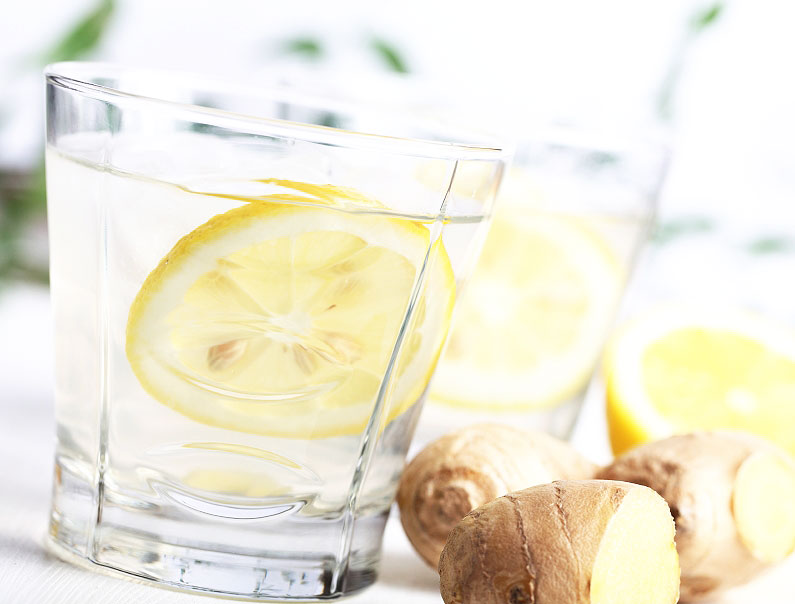
Additionally, our bodies also produce a variety of toxins as waste products or as by-products of the various metabolic processes. Gradual build up of these unwanted, and quite simply, poisonous substances can lead to ill-health (infection) or even disease. Despite this onslaught of toxicity, the body has a remarkable capacity to detoxify such toxins, that is, to break them down in such a manner that they become either less toxic to the body, or are converted into innocuous substances that are eventually excreted. The role of the liver is fundamental in keeping the toxins in the blood at a minimum level such that we remain illness-free. The immune system is also a key player in this detoxification process, as are the circulatory systems that assist in the removal of the toxins to the excretory organs. In this respect, the blood and lymphatic system are vital systems in supporting the crucial role of the liver and associated detoxifying organs in maintaining optimum health. Herbal tonics that revitalise these organs help a great deal, especially if they have been neglected (through poor diet, or damage). This particularly applies to the liver since it is the first port of call for detoxifying any toxic substances that have entered the body (through the gut or via the bloodstream).

Toxic build up is an inevitable part of all metabolic processes that occur in the body, although the liver’s ability to make them less harmful is very impressive. In this respect, it is worth noting, not the actual number of times we fall ill but in fact, the periods of time in which we remain symptom-free.  Without this vital function we will continually suffer illness and disease. Poor dietary habits over a long time can impair the vital detoxifying function of the liver and some of the more harmful substances that we consume (like alcohol and prescription drugs) can even damage the liver cells, making them less able to cope over time. This explains why so many with poor diets and lifestyles are perpetually run down, lacking in energy, have lost their vitality and are prone to infections. Herbs which are notable in assisting the functions of the liver are dandelion (Taraxacum officinale), milk thistle (Silybum marianum) and fringetree (Chionanthes virginicus) amongst others. Some of these herbs are commonly included in herbal tonics for this particular purpose. Equally, they are also prescribed by herbalists for conditions that have a metabolic basis.

The eastern philosophy of fasting is now also commonly practised by some in the West as an active choice in adopting a healthier lifestyle. Some of the world’s major religions such as Hinduism, Buddhism and Islam have well established traditions in fasting and with scientific knowledge, it now appears that regular fasting is an effective way of cleansing the system of toxins and optimising health & well-being. Provided that it is done sensibly, vital body systems, particularly the digestive system, the liver and the kidneys have an opportunity to rest, preventing not only their exhaustion (when illness can set in) but eliminating any potentially infective agents that are lying dormant within the systems.

Herbs for Detox
Much has been written about and publicised on the subject of detox and detox diets. Commercial interest must be viewed with some caution and much of what passes for ‘detox’ is simply good nutrition, sensible eating combined with a healthy lifestyle.

Considering the amount of ‘invisible’ toxins in the environment, common medications, lifestyle habits and toxins consumed in food, it is perhaps easy to see how almost everyone in a Western society can expect to suffer from some degree of toxicity. In the worse case scenario, the toxic burden on these vital organs has been known to be a major contributory factor for some forms of cancer, particularly cancer of the bowel.

The body has its own natural detoxifying organs: the liver, the kidneys, the digestive system and associated organs and structures. The elimination of toxins from our cellular environment, including those from foods must consider the efficient functioning of all these organs systems in addition to a good circulatory system. Proper nutrition, a well balanced diet and a healthy lifestyle are all factors that will assist this process and prevent toxic overload on these vital structures.

Our diet has a very important part to play in detoxification. Consequently, what we consume can assist our organs and there is some excellent literature on the foods that are recommended for this purpose (see recommended reading at the end).

I focus on the liver here as it is central to ‘detox’. It is essential to appreciate that the health of the liver is directly dependent on the type and quality of the food that is consumed. Though it carries out essential detoxification, like any other vital organ, it has its own nutritional requirements in order to perform its function of repair, regeneration and rebuilding.

In a nutshell, foods to cut out are those that are rich in refined sugars (such as cakes, biscuits, chocolates, sweets etc…), pre-prepared or ready-made meals, foods containing hydrogenated (or trans) fats, alcohol and drugs (including tobacco). Examples of the kinds of foods that are beneficial to the liver in its health and hence, its proper function are listed below. These include plenty of fresh fruit and vegetables.

Herbs and spices are also beneficial to the liver. Some of the more common ones which are great in any detox programme include the following:

  • Garlic
  • Onions
  • Fennel
  • Radish
  • Dandelion

FRUITS
VEGETABLES
Lemons
Contains an important chemical which assists in the breakdown of gallstones. Also contains pectin, a soluble form of fibre which is good for bowel health (prevents constipation) and lowers blood cholesterol. A good source of vitamin C too
Artichoke
Helps reduce cholesterol and other fats in the blood. Improves the detoxification, repair and regeneration capacity of the liver. Also protects against liver damage
Apples & Oranges
Both contain pectin which prevents constipation. Also helps reduce cholesterol in the blood. Apple contains a host of important nutrients incl. antioxidants which can help protect against cancer. Oranges are a good source of vitamin C
Brussels sprouts
Part of the brassica family (other examples are cabbages, turnips, broccoli, cauliflower and swedes so helps in the detoxification processes of the liver. Increases oestrogen metabolism and excretion so thought to confer protection against some of the oestrogen-dependent cancers, particularly breast and uterine cancer
Grapes
Excellent for preventing heart disease (contains important chemicals called proanthocyanidins) which are also antioxidants so will help prevent cancer as well
Cabbage & turnip
Cabbage, one of the oldest of the brassicas, and the ancestor of broccoli and cauliflower. Cabbage, like other brassicas, is high in sulphur, so excellent for liver health. Helps in the detoxification processes and confers protection against cancer through its antioxidant activity. Similar benefits from consuming turnips but both the leaves and root need to be eaten.
Pineapple & Papaya
Both contain naturally-occurring enzymes that help breakdown protein from food so will help digestion. Also contains cancer preventing antioxidants
Broccoli
Broccoli, another popular member of the brassica clan has similar benefits to the liver
Grapefruit
Contains important nutrients, antioxidants and pectin. A key player in liver detox reactions
Leeks
Highly nutritious and contains key antioxidants such as the bioflavonoids. Also contains sulphur compounds which assist in the detoxification role of the liver
Berries esp dark red, blue or black
Contain high levels of proanthocyanidins and bioflavonoids that help protect against major diseases like heart disease and cancer also contains other important nutrients such as vitamin C and carotenes (both have antioxidant properties)
Watercress
Rich in the antioxidant beta-carotene. Also contains sulphur. Both are excellent for the liver

Excerpts from the book:
Title: Modern Living, Holistic Health & Herbal Medicine – improving health & well-being with herbs and lifestyle changes Author: Yaso Shan Contributions from: Dr. Catherine Whitlock; PhD Foreword: Miss Jenny Seagrove
Date of Publication: 2011 Publishers: Booklocker Inc.
http://www.amazon.co.uk/Books-Yaso-Shan/s?ie=UTF8&page=1&rh=n%3A266239%2Cp_27%3AYaso%20Shan 

Friday, 11 March 2016

The Kind of Herbalist that I Am

I admit it.  I go on Facebook.  There are many herbalists and plant enthusiasts there.  I like to hear what people are doing with plants and sometimes I feel competitive, not good enough, left out or even scorned for the kind of herbalist I am.  I know that this is my own transformational journey to become the kind of herbalist that I am fully.  

In some ways Facebook is a good tool for discerning my identity. Without it I may not know what kind of herbalist many other people are.  The scrutiny has actually helped me to be clearer about what I am offering with the plants.  

Before this social media thing, there were herbals and conferences to let me know what people were doing.  

Now that I have said that, I want tomake it clear that other people’s definition of “herbalist” doesn’t have to be mine.  That scrutiny and criticism, scorning and competition are not part of being an herbalist.  These are the mindset of someone who is over thinking who they are instead of seeking and knowing who they are.  I have been on that road, and have veered off it. I am on my own path into the woods.  

I am a shamanic herbalist. I communicate with the plants around me as companions and wisdom teachers.  I have developed intimate relationships with the plants with which I live.  I seek them as teachers.  They have told me that they want me to constantly be talking to them.  

I also eat these plants and I make herbal preparations with them.  I know which ones offer themselves for this because I ask them if I can harvest and they tell me yes or no.  

In the past, I have thought that I should study clinical herbalism, study more deeply the science of plant medicine.  Whenever I sought to move forward with this, there was a deep resistance in me.  What I finally discovered is that the studies being offered were in rooms with power points and white boards and fancy words and I did not want to be with plants like that.  

And yet, the scientific information about the plants fascinates me.  I want to know more and more of it.  I want to discover new ways of utilizing the plants for healing and to know how others have done that.  
I read and I read about it. 

It is a paradox.  

Nettle Soup
Here is how I can explain it.  As I have spent hours and hours with certain plants in my yard, listening to them, allowing them to teach me, listening to my apprentices and students learn from the plants and what they have for them, I have developed familiarity with who the plants are.  As I have prepared the plants for tincture, vinegar, infusion, honey, oxymel, infused oil, I have developed communion with the plants.  As I have utilized the plants for healing and seen others heal by utilizing the plants, I have developed intercommunication and fellowship with the plants.  

When I read a plant study, or an herbal monograph or a description of the medicinal qualities of the plants….well,  if it is one of my plants then I listen for the connection I have and see how that information serves me or doesn’t serve me.  If is is a plant I don’t know about, I develop my curiosity about this plant and whether it is one I desire to get to know better.  

The scientific information about a plant is linear.  It is fixed information.  Knowing nettle has a lot of calcium in it is beneficial to me because I know that this will support the health of my bones.  Knowing nettle as a friend and teacher, drinking nettle infusion and eating nettle is much more beneficial to me.  I understand nettle intimately and I can feel its benefit.  Nettle communicates with me in a language of the senses.  I discern nettle’s teaching and benefit for me in her breath that she offers me, in the taste of her infusion, in her sting.   I hear nettle messages on the wind, wisdom messages that change me.  

This is the kind of herbalist I am.  

May it be in beauty.