Wednesday, 3 November 2010

Birch- The lady of the woods


Species: Birch- White Birch, Cherry Birch, Black Birch, Sweet Birch, Golden Birch, Paper Birch (Betula alba, B. lenta, B. allaghaniensis, B. papyrifera, b. populifolia)

Parts used: Leaves, bark, twigs, buds, sap
Energetic: Cool, dry
Taste: sweet, aromatic, astringent, bitter
Actions: stimulant, relaxant, diuretic, diaphoretic, tonic, anodyne, vulnerary

Botanical/Ecological description:
Birch- as a tree, is a deceptive name. There are at least 4 species of birch growing in New England, and beyond, with some overlapping and some unique uses, and the White Birch, of Europe, has long been considered the “official” medicine. But, as far as I know all the birch species I’ve listed above are useful medicinally some degree or another. Birches are colonizing trees, and often grow in areas where soil has been disturbed, forests have been logged, along the edges of streams and bogs. It comes in to “heal” the land, hold the soil, and begin the process of ecological succession. Many birch species are not long lived, as soon as other trees grow tall enough to shade them out, the birches decline and begin to die off, leaving their bodies to mulch, and nourish the soil for the next generation of forest trees and plants.
White and paper birch have white papery bark that peels in layers easily. The twigs are dark, and leaves are resinous and triangular shaped.
Grey birch also has white bark, but doesn’t readily peel as does the paper birch.
Black and Yellow birch are both characterized by leaves that grow in pairs from the axils, smooth dark red to yellow bark with lenticels in the twigs and young saplings. Both have the sweet wintergreen smell and flavor to the inner bark. Black birch bark does not peel, but on older trees does begin to crack in to thick plates. Yellow birch bark does begin to peel off in layers, but the layers are finer, golden, and not as paper like as the white paper birch bark. Black birch is extremely common in the east stretching south from SW Maine to Alabama and east to Ohio. Yellow birch tends to grow in more Northern climates- its range extending north into Canada & Nova Scotia. Paper birch grows in northern regions, including to the pacific NW and into Canada. Almost all birch species have strong relationships with fungi of varying kinds- including medicinal Chaga (inodotorus obliqua) and Birch Polypore ( ) found in Europe and one of the medicines Otzi the Ice Man carried with him. Birch wood is not at all rot resistant, but the bark is, and you can often find empty hollow shells of birch bark from which the wood has rotted littering the forest floor.


Symbolic/spiritual description: Birch is known as the “Lady of the Woods.” I do believe this term is most often attributed to the graceful white and grey birches with their branches that lean over gracefully, drooping green sprays of leaves. But I also find the energy of Golden birch as well to be especially feminine- more along the lines of the strong, vibrant, huntress energy of Artemis, with a strength in sexuality and independence, yet still fiercely protective and nurturing when needed. Black or Cherry birch is a bit more ambiguous in its “gender” nature. Some people feeling it to be feminine in energy, others to be more like a young adolescent male (especially in the young saplings.) Birch, as it is a colonizing tree, is the symbol of beginnings, rebirth, birth & labor, and of motherhood. She has also spoken to me deeply about nourishment, motherhood, sacrifice and going down to the BONES of a matter. Her sap (in all species) flows freely and richly in spring- almost like the milk from the breast of the mother, and this sap is deeply nourishing, rich in vitamins and minerals. In addition, the many boney white bodies of birches that often litter the forest floor, to me, look like bones, and also remind me of the self sacrifice the birches make of their bodies to fertilize and nourish the soil for the future. I also find it extremely interesting the birch relationship with fungi, especially medicinal fungi. She gives of her life blood and bones to support these organisms, which in turn provide us with some of the most deeply healing, strengthening and remarkable medicinal properties (Chaga is especially wonderful- read up on it.) These fungi carry the life force of the birches within them, even after the host tree has passed on. Chaga mead is rich with the taste of sweet birch- giving us a reminder of her long lasting nourishment.


Uses/Applications:
The uses of birch are myriad, they vary from species to species somewhat, so it is important to know what properties you are after, and which species you are using. I will start with Black and Yellow birch, which are very similar medicinally speaking. Both contain the aromatic wintergreen smelling methyl salycilate. The bark of both can be used specifically for this compound as a pain relieving ally. Infusion of the bark, elixir or tincture, and infused oil all capture this property of the birch use for muscle soreness, achy joints, mild headaches, sprains and bruises. The bark of cherry and yellow birch is also a tonic and astringent, and is excellent used for loose bowels with nausea, sour stomach, or weak digestion. I use the warm infusion of the bark primarily for this, often mixed with a warming stimulant like ginger or cinnamon depending on the situation. It is also somewhat diaphoretic, and will stimulate a gentle sweat by increasing circulation from the core to the surface and relaxing tension in the tissues of the skin and capillaries. The tincture of the bark itself is nice for mild nausea or gas, but you really need the infusion of the bark to get the most benefit of the tonic properties for weak and watery digestive problems like diarrhea. The bark harvested in the spring is most certainly a stimulating spring tonic- to enliven the blood after a long, sleepy winter. It is rich in mineral nutrients from the running sap, and energetically has an upward moving tendency. It will increase circulation from the core to the surface, tonify the digestive organs and kidneys and nourish the blood with its nutrients.
The inner bark is also considered a tonic for the skin and hair, and helpful to heal & soothe itchy, irritated and weepy sores and rashes. An infusion of birch bark can be used as a wash for poison ivy rash, chicken pox/measles, herpes/shingles, or other slow to heal sores. As oils can sometimes spread these types of rashes around, I’d be cautious with the use of infused oil here, but the infusion as a wash or bath will be pain relieving and healing. I have included black birch bark and leaf infused oil in salve for cold sores, along with some other herbs, and have received very good feedback.
Note: the essential oil of sweet birch is available, and is an excellent pain reliever when used topically. Please note that the essential oil is EXTREMELY concentrated and has high levels of methyl salycilates in it, which can be toxic in moderate doses, even topically. Please use the essential oil only topically, and never directly on the skin undiluted. And probably a good idea not to use it daily for extended periods of time over large portions of the body. (I.e point tenderness vs taking a bath in it!) There have been cases of illness and even death from young people using excessive amounts of an icy hot rub for muscle soreness which contained methyl salycilates. Granted this is usually a synthetic concentrated form, but methyl salycilates are significantly toxic enough to warrant a warning in all the old literature on the plants containing them, and so I pass that on to you.

The leaves of both black and yellow birch are a specific and effective remedy for the kidneys, being both diuretic and soothing to irritation. It is used to mitigate a tendency to form kidney stones and gravel. Large kidney stones with pain, fever and blood in the urine need to be addressed by a medical professional, but birch leaves can be used as a preventive for those who tend to gravel formation, and a soothing tea for the remaining irritation. Useful and soothing also in cystitis and irritation of bladder, urethra and kidneys in self limiting UTI. Should be combined with other anti-infective herbs to address the infection.

White and paper birch – also has a long history in Europe as a kidney remedy, much as explained above for black and yellow birch. Here again, it is the leaves used for kidney irritation and gravel. The bark of the white and paper birches contains betulin, a substance being studied in many places for its immune boosting effects, its activity against viral and bacterial organisms, and is especially helpful in skin disorders when used topically. Here you would use the bark tea (inner and outer barks) or decoction as a wash and internally. The bark of these species is diuretic and acts on the kidneys as the leaves do, being soothing and softening to gravel. It is mentioned for “dropsy” which is essential water retention and edema. Matt Wood mentions its use as a hair tonic- a young woman who used nettle and birch bark tea as a hair wash improved the texture, thickness and health of the hair. I haven’t tried this, but certainly worth giving a whirl. Birch bark is also toning and astringent topically, and while being most well known for skin disorders, rashes, eczema, herpes/pox, I have also seen it used in formulas (commericial) for cellulite.

Sap of the birches is well known as a nutritive tonic- and is tapped in the spring from the trees, which run after the maples. Black and golden birch will have a stronger wintergreen flavor, but all the birches may be tapped. The sap is often fermented, but can be boiled into syrup, but requires more sap per gallon of syrup than does maple.

Fungus: Keep in mind that the fungi that grow on birches concentrate many of the compounds in birch, including betulin. These mushrooms are particularly strong medicines for the immune system. If you are lucky enough to find them growing on birches in significant quantity, they are beautiful medicines. Chaga and birch polypore are easy to ID and are safe to use. But do go with someone familiar with them to learn about them in detail.

Friday, 29 October 2010

October Hips

October hips have ripened

They'll go into jars and bottles and liquids to soak

in a honey-brandy cloak

but others are not to be harnessed for such uses.

They dangle on canes and wave temptingly

slow with a seasoned swagger like Marilyn

wearing flame red

on a bed of blue sky sheets with white fluffy

pillows and spooky moon nightcaps.


From arms in the wind they shimmy

in rhythms from the far east

with bronzed skin and burgundy skirts

they quiver in Autumn induced showers

and sighs

with long legged undressing thighs

of cherry bark trunks

and spellbinding skies.


October's sweet bribes

like a wine tasting for my eyes

and reprieve from redundancy

gemstones on mountains

elixirs of beauty..


On tiptoes of petioles

hips ripen sweet after frost

into memories and jars they will go

to be sipped, and savored,

forever not lost to my taste

for lusty sips of earth on my lips;


October's hips


Tuesday, 19 October 2010

Creamy Red Pepper Sauce

Dress up your dish with this simple, gluten and dairy free delicious sauce.  Perfect on sauteed greens, scrambled eggs, on meats, as a dip for veggies, or a salad dressing!

1 - 12 oz jar or 3 roasted red peppers, drained
3 cloves garlic
1/3 c olive oil
2 tbsp tahini
1 tbsp balsamic or apple cider vinegar
1 tsp salt
1 tsp black pepper
2 tbsp sweet paprika powder

Put it all in the blender!  Serve immediately or keep cool to use later.
Yum!

Nourishing the Wild Self: Part 4 -Wild Foods and Community


Eat Wild
"Once we have tasted wildness, we begin to hunger for a food long denied us, and the more we eat the more we will awaken." -- Stephen Harrod Buhner

An even deeper way of connecting with and nourishing your wild self is to consume wild food!  For millions of years humans have foraged and hunted everything they ate directly from the wild.  Eating from the wild requires even more consciousness and effort, and deepens our connections with the wild land, and our wild body and heart in a way that nothing else can.  Once you tap into the sources of wild food available to you, you become more aware of the fact that we are OF this EARTH, and she provides everything for us- air, water, food.    Eating from the wild season after season allows you to begin to see the larger patterns in ecosystem well-being, and fluctuations that are normal, or those which are the result of human interaction.  When you have this kind of relationship with the land you live on, weather it be an urban park, the edges of the community garden or the wild lands in the hills, you can become a caretaker and spokesperson for the well-being of that land, and the communities, human and non-human alike, that depend on it.  By seeing the wild plants, animals and places as a resource to be cared for, respected and used for food, you can prevent them from becoming parking lots, or shopping malls, or dog parks.  If you and your loved ones depend on those places and resources, you will want to defend and protect them.
 Eating wild makes you more self reliant and confident, as you become aware of what is available to you beyond what others provide.  Wild foods can include wild plants growing in abandoned lots, on the edges of farmers fields, wild berries, wild nuts and seeds, animals that are hunted for food, or fresh roadkill.  The benefits of tapping into wild food sources are many.  Plants grown on wild soils that haven’t been depleted by extended periods of agriculture are richer in nutrients, and wild animals eating the diet they evolved with, and moving about the landscape on a daily basis are healthier, happier and more nutrient rich.     
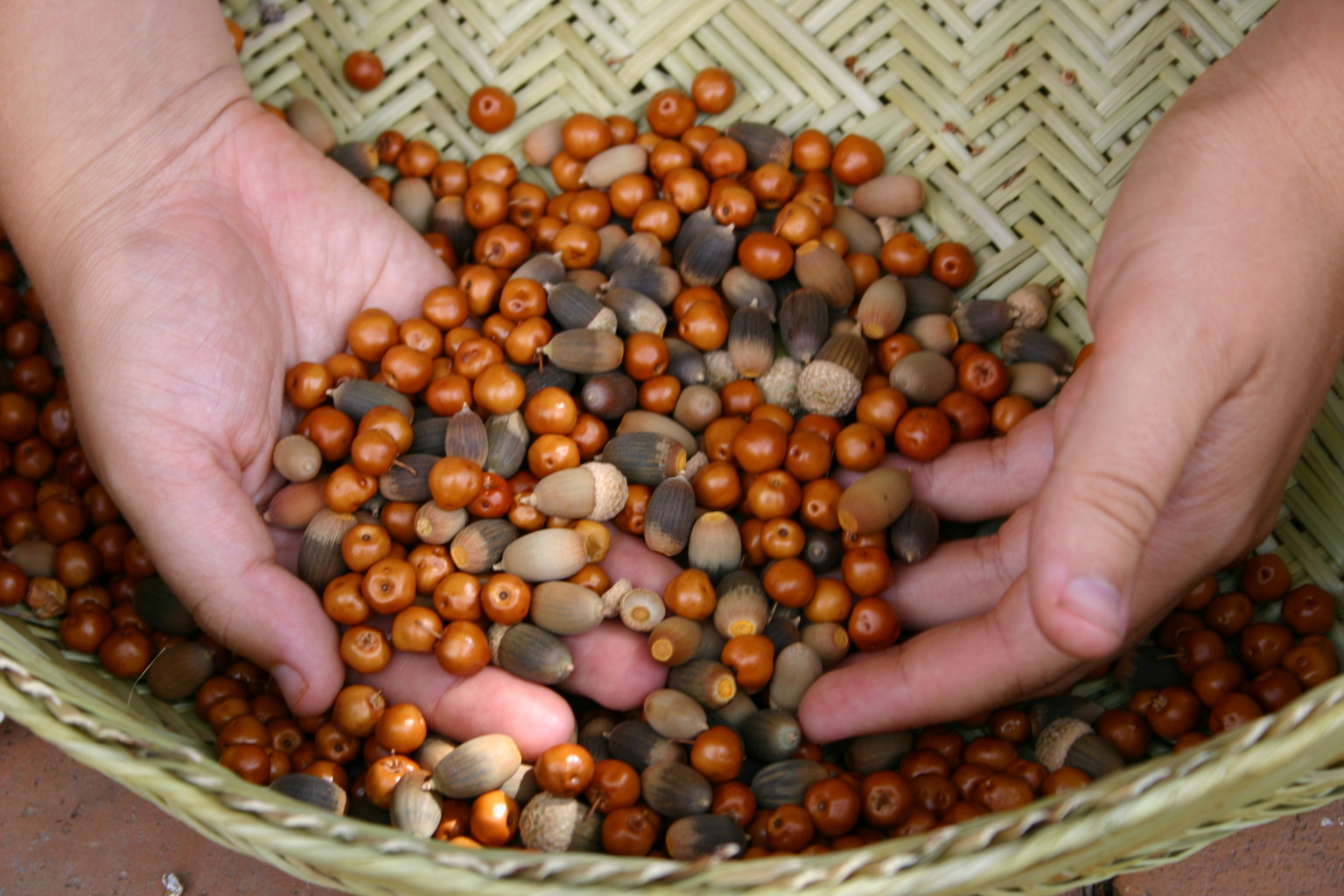
The very act of harvesting wild foods reconnects YOU with your wild self and wild body.  What does it feel like to lay stretched in a sandy river bottom picking up acorns for hours?  Do you notice how your senses sharpen, you notice every breath of wind, water tastes that much sweeter, you take in deep nourishment from the land and creatures around you, weather you see it that way or not.  Many studies have shown that time in nature improves peoples physical health, and emotional/spiritual health as well.  The wild self needs to be nourished in this way.  This goes for those who gather wild plants, and those who hunt animals for food.  Putting yourself face to face with the reality of what it means to live on this earth, and what “food” really is.  Food is far more than a plastic wrapped hamburger patty or salad in a plastic box.  Food is our relationship with the land, and a source of nourishment on multiple levels.   And how does it feel to your wild self to be able to provide sustenance and nourishment to your loved ones and community?  How does nourishing others nourish you? 
How can wild foods nourish our communities as well?  It is easy to imagine a community of women going out to gather the wild weeds, fruits, and nuts together, and returning to the community to process, store and prepare these foods.  This isn’t just an actitivy for tribes of old.  We modern humans need to nourish and strengthen our bonds to our communities, and community harvesting is a beautiful way to do that.  The same thing goes for hunting parties of men and women, and even children.  Entire families join in the hunting trip, getting out into wilder places, and can take part in the butchering and processing of any animal taken.  This kind of community work increases our sense of connection with our neighbors and friends, and our sense of interdependence.  We come to know who and how we can rely on in times of need.  People can come together to protect resources that serve the community. 
 
Food as Sacred
It is also wise for us to remember that our wild selves need to be connected with “the sacred.”  For some that means joining a religious community, others find it in private meditation.  But the sacrament of food is something many people have forgotten and should be brought back into our daily lives.
  Food brings people together- both to prepare it, and to eat it. Many family traditions revolve around special holiday meals, or traditional dishes.  The kinds of foods we eat are deeply connected with our social heritage and culture, and food is deeply rooted in our emotional sphere and limbic systems.  Eating food, no matter with whom, how we eat it or what we eat should be a sacred act.  The act of taking life- no matter how large or small, plant or animal, into our body to sustain us, requires deep responsibility, gratitude and presence.   Food is a sensual experience, and we should make an effort to fully take in all the nourishment that food provides- on that sacred level.  This means not watching TV while eating, paying attention to every bite, eating peacefully and joyously with others we share our meals with, giving gratitude to the creatures that gave themselves for our nourishment, and anyone else involved in the procurement of our food: farmers, workers, market vendors, hunters, gatherers etc.


No matter where your food comes from it should be eaten in the spirit of gratitude and peace.  If you feel guilty over what you are eating, or where it came from, and can’t eat without those feelings of remorse, it is time to rethink.  What is most nourishing to you?  What nourishes your community and your land base?  Are there ways you can obtain food that will fill you joy and gratitude?  Many people have chosen to refrain from eating certain foods for the guilt or environmental destruction it causes, but no longer nourish themselves completely.  It is a two way street, you both nourish your wild self deeply, and make choices which nourish the communities and land around you.  Choose to get your meat from a local rancher who treats his/her animals with love, respect and a good living.  Grow your tomatoes in a pot on your patio if you can’t get tomatoes that haven’t been raised with pesticides and slave labor.  Find or develop a community garden to allow your community to grow their own produce.  Harvest fruit from trees planted in your city that fall to the ground and rot otherwise.  Find a hunter who is willing to share his/her meat with you, or take you along and teach you to hunt your own.  Join a CSA or get to a farmer’s market.   Realize that every step you take, no matter how small it seems, to free yourself from the industrial food system that damages not only our environment, but our communities and our own personal health, serves to nourish the wild on many levels.  Find just one thing you can start doing today, or when you get home.  What will it take? Find ways to juggle your finances, or work together with others to make it easier to acquire good food.  Ride share to the farmers market each week, buy a grass fed cow and split it with your neighbors, grow a garden.  Realize that things can NOT go on the way they are in our culture- and we are responsible for making the changes happen we want to see in the world.

If you've enjoyed this series, please be aware that I gave this as a class at the 2010 Traditions in Western Herbalism Conference, and recordings will be available in the near future!  Check out this years conference! You won't want to miss it!  Traditions in Western Herbalism Sept 15- 18, 2011

Sunday, 17 October 2010

Storm


Living at the tip of the lighthouse

on the edge of a crashing ocean

I shut my eyes tight and hold on

to the salty metal bars of the balcony

and face the stormy slap

I hold my breath

push my feet into the concrete

and imagine I'm a lightning bolt

A part of the storm itself

absorbing the charge like a battery

and storing up strength

For the long and thrashing ride


Friday, 15 October 2010

Nourishing the Wild: Part 3- nourishing foods and local food

The human body is an amazing system that runs, heals itself and prospers when given all the right tools or nutrients to do so.  Many of our herbal therapies revolve around NOURISHING herbs like Nettles, oatstraw or rosehips.  The wild body is made up of all that you eat.  Shouldn’t the food we consume be firstly, nourishing?  The wild body needs NUTRIENT DENSE foods.  This excludes foods that have little nutrient content.  This includes processed foods, especially those which have to be fortified to have any nutrition.  White flours, sugars, sodas, chips, cakes, pastas.  I tend to think of industrial foods, foods which come in a fancy box or bag, and bear little or no resemblance to the original plant or animal from which it came.    Nutrient dense foods are whole, unmodified, and vital.  This includes fresh produce picked at peak ripeness (not artificially ripened with chemicals in shipment from two continents away), animal foods from healthy, free range, wild sources, nuts/seeds.

Modern vs Traditional Foods
  The work of people like Weston Pricehave brought to the forefront the fact that for much of history, and prehistory, the diet that humans ate served them well, and we were free of most chronic diseases (diabetes, cardiovascular diseases, cancers, autoimmune conditions).  These types of diseases are known as the diseases of civilization, and only showed up in societies after the introduction of widespread consumption of grains, and worsened dramatically with the introduction of modern processed foods and sugar.  Many traditional peoples living on their traditional diets into the early 1900’s suddenly were found to have “modern” diseases shortly after the introduction of these modern foods by colonizing societies.  Doctors who worked in colonies traced the appearance of these diseases.  The human species literally ‘grew up’ on foods that consisted of wild or pastured meats, seafood, eggs, nuts and seeds when available, wild fruits like berries and wild plant foods. 
Our modern food system has further decreased the nutrient content of our food by depleting the soil, and feeding animals inappropriately, and in both cases growing the ‘product’ in a way that is not in line with the needs of that organisms biology.  Soils that have been under cultivation for any extended period of time gradually get depleted of minerals, through uptake into the plants grown there.  Modern industrial agriculture only replenishes the soil with three nutrients (Nitrogen, Phosphorus, and Potassium), that are required for plants to survive, but neglect to replenish the soil with other minerals like magnesium, calcium or other trace elements.  This is including all the soil that runs off in irrigation ditches, or blows away as dust in drought years.  Thus- an apple is not what it was 100 or even 50 years ago.  The nutrient content has decreased by leaps and bounds.
Likewise animals raised for meat are confined and fed corn and soy (much of which has been genetically modified), which disrupts the delicate balance of gut flora, increases the incidence of e. coli, and completely changes the fat profile of the animal, favoring the production of Omega 6 fatty acids vs Omega 3 fatty acids, unlike their wild and grass-fed cousins.

So the wild body needs and desires nourishment- what precisely do we need to feed our wild body in the most optimal way? 

Minerals- minerals are abundant in plant foods like greens and fruits.  Grains and legumes tend to prevent the absorption of minerals unless fermented and sprouted.
Seafoods like kelp, oysters, etc are rich sources of many minerals, including the precious trace minerals that are no longer found in our agricultural soils.   Certain minerals are richer in animal foods like zinc and iron.

Healthy Fats- Contrary to what “modern’ knowledge has been telling us for the last 50 years, fat is an essential nutrient.  Fat phobia is rampant in all circles, but fat is not our foe.  Fat is a dense source of energy, rich in fat soluble vitamins that are hard to get otherwise in the diet, fat makes up our cell walls, 70% of our brain tissue, is the precursor for hormone synthesis.  Most commonly Americans are deficient in the Omega 3 fatty acids, which for much of history we got from eating wild, grass-fed animals and fish.  Modern meat production practices have virtually eliminated this from our food.  Eat wild fish and grass fed meat.  Many fat soluble vitamins (A, E, D) are deficient in folks who avoid healthy fats.

Vitamin D – Though present in small amounts in fatty animal foods like fish, liver, full fat dairy products and eggs, adequate vitamin D intake has most often come from our skins ability to make it when we are exposed to sunlight.  The wild human optimally spends time outside in the sun everyday.  To fully nourish your wild body – you need to get outside.  Go out and forage some wild foods, grow a garden, and take off the long sleeves and sunscreen for a little while. Make some Vitamin Sunshine D.  For many of us  who live in cold climates in winter, or who work inside all day, getting enough Vitamin D can be downright impossible.  Many practitioners of all walks (natural and allopathic) are beginning to see the importance of Vit D in all sorts of chronic ‘modern’ diseases, and recommending to their clients/patients to supplement with Vit D.  Range can vary between 2000 i.u. to 10,000 i.u. per day.  You can get your Vit D levels checked with a simple blood test (25(OH) vitamin D) and it should be somewhere between 50–80 ng/mL.  For most people this requires at least 4000 i.u. per day.  Nursing or pregnant mothers may need more, as do those with serious health issues (cancer, diabetes, autoimmune disease, osteoporosis etc).


Eating Local:
Eating locally is all the rage these days, for many reasons. The food tastes better, is more nutritious, supports local economies and puts us in contact with the people and the land producing our food.  In what ways does this nourish our communities and land bases? And how does it nourish our wild selves more deeply?
Food grown and produced locally is generally fresher, more nutritious, and most often grown in a sustainable way.  When you buy food from local farmers, markets and vendors you support the right livelihood of those people in your community.  You give these people who love the land, and who love what they do a chance to do just that, and a way of nourishing THEIR wild self. When supported by a community that values what they provide, and asks for what they want, these people can become important stewards of the land base which the community depends.  It becomes less about how much money, and growing more and more, and more about what is valued by the community, and how to sustain the land, and the community.


 When you support local growers/ranchers/farmers you can also ask them for what YOU want.  Knowing that they are supported by their community, they can respond and provide for what the community asks for.   
By sourcing your food locally you can also disengage from the industrial food system which is so damaging to the environment, local economies and our health.  Another important aspect of this disengagement from a very unsustainable industrial food system, is peak oil.  I don’t know when we will run out of oil, and if we’ll have developed an alternative energy source, but at the very least, the reduction in cheap oil availability is going to seriously impact how food is delivered.  No more oranges from Chile in December or lamb from New Zealand.  Wouldn’t it be nice to know that you and your family will still have access to nourishing food sources that are local if and when that happens?  And by engaging in the local food market you also strengthen your ties and relationships with the community, the community that you may be dependent on in an emergency, or when things go awry.

Places to get your local food include farmer’s markets, which are springing up all over the country, both urban and rural.  CSA’s (community supported agriculture) where your dollars go directly to the farmer to produce food for you over the season.  I’ve lived in many places, and have found that local ranchers and farmers often sell their products right at their home.  Ask around in the community- chances are someone knows someone who is selling their eggs, or raising their own grass fed bison.    Local co-ops often are full of local products as the local movement gains strength.  Make sure to ASK for it!

Of course, the most obvious way to eat locally is to grow your own food.  It is true that many of us live in apartments in the city with no garden space so to speak of.  Many urban areas have thriving community garden organizations that will rent you a small plot for a fraction of the cost it would be to buy that much organic produce at the market.  When I was a member of the community gardens I paid somewhere between $30- $200 for an entire season/year of garden space and water.  Add another $100 for seeds and plants and soil amendments.  You’ll pay for that in a month of buying produce at the market. In addition, community gardens have a unique mix of beginning and well seasoned experienced gardeners, who are all eager to help each other, and learn from each other.  Even if you’ve never gardened before, the community garden will have someone who can answer your questions.   Learning to feed yourself and your family from work and love you put into a seed and the earth is an incredibly nourishing experience for the wild self.  It provides freedom, confidence in yourself and deepening connection with the land and ecosystem you live in.  You become closer to understanding that plants are living beings no different than animals, and the finer nuances of what each individual plant needs, and where the water comes from, where the nutrients for the soil comes from, how often it is raining, and what the seasons are asking of you in tending your food garden.

Monday, 11 October 2010

Elderberry Syrup

Here's a recipe for elderberry syrup, without cooking it to death!
Yum!!


My favorite elder syrup includes the berries and flowers, plus stimulating, warming spices to improve absorption and circulation.  I prefer not to overcook my elderberries by boiling for extended periods of time, and have found that excessive cooking weakens the potency of theelderberry medicine.  This syrup uses a strong 1:2 infusion of the herbs, which is preserved with honey and alcohol.  This syrup is delicious and strong medicine for the cold and flu season for the whole family!  I have also found elderberry preparations to be an excellent ally for shingles, chicken pox, and other herpes viruses.  Take 1-3 tsp per day all season long, or 1/2 tsp hourly in acute illness. 


1 cup dried elderberries
1/2 cup dried elderflowers
2 tbsp ginger chips
1 tbsp cinnamon chips
16 oz water
4oz vodka or brandy
1 lemon, juice
16 oz honey or sugar

1. Mix all the dried herbs together in a jar.  
2. Pour 16 oz boiling water over the herbs, and 4 oz of vodka or brandy
3. cap and let infuse 8 hours or overnight.
4. In a muslin, jelly bag, or cheesecloth strain the herbs from the liquid.  Squeeze gently to get as much fluid from the herbs as possible.
5. Add the juice of 1 lemon.
6. Measure out exactly how much liquid you have in a glass measuring cup.
7. Add an equal amount of raw honey or sugar to the liquid.  Mix well until sugar dissolves.
8. Bottle and store. It will keep best under refrigeration.  If you wish to keep this in the pantry, you will want to use more alcohol in step 2 (8 oz of 50% vodka) to preserve.