Showing posts with label lemon. Show all posts

Saturday, 12 March 2016

Spring Clean your Body

We spring clean our house, but how often do we spring clean our body? Fasting, or abstaining from solid foods for a time, assists the body to cleanse. By eliminating food, the enormous energy required to digest food is released and put to the task of spring-cleaning the body. The liver and entire digestive system is given a well-earned rest.

Fasting begins as soon as you stop eating. There are many types of fasts, and the duration will depend on your work commitments and physical and mental state. Each person is different and will respond differently to fasting, so listen to your own body. However, there are some basic rules:

  • Consult your physician or naturopathic doctor before undertaking a fast if you are on medication or have any medical condition.
  • No smoking or drinking alcohol, coffee, or tea. You may want to cut down consumption of these items gradually in the weeks before the fast.
  • Discontinue vitamin supplements.
  • Two days before a fast, eat light foods: mainly vegetables and fruits.
  • You may want to try a fresh-foods diet as an alternative to fasting to begin with.
  • Allow yourself to rest when you feel like it during the fast. You may experience discomfort, headaches, dizziness, and nausea as toxins are eliminated.
  • Avoid stress and concentrate on positive thoughts.
  • Fast on vegetable and fruit juice (freshly extracted), pure water, or herb teas. It is important to drink at least eight large glasses of water a day.
  • It is important to have a bowel movement once a day while fasting. Use senna leaf tea, linseed tea, yellow dock root and burdock root decoctions or capsules, or enemas if necessary.
  • Exercise regularly: walking is ideal.
  • Resume eating gradually after fasting. Start with a piece of fruit or lightly steamed vegetables. Take two to three days, depending on the duration of the fast, to resume normal food intake. Never overeat.

The benefits of fasting can be enormous. It allows the body to throw off toxins and regenerate tissue, and it can result in heightened self-awareness. If you decide to fast for longer than three days, seek guidance from your physician, naturopathic doctor, holistic nutritionist, or other experienced practitioner.

Detoxification
Toxins are poisons which manifest in the body at varying levels of potency. They are constantly introduced into the body through the food that is consumed, through the air and through water.
Additionally, our bodies also produce a variety of toxins as waste products or as by-products of the various metabolic processes. Gradual build up of these unwanted, and quite simply, poisonous substances can lead to ill-health (infection) or even disease. Despite this onslaught of toxicity, the body has a remarkable capacity to detoxify such toxins, that is, to break them down in such a manner that they become either less toxic to the body, or are converted into innocuous substances that are eventually excreted. The role of the liver is fundamental in keeping the toxins in the blood at a minimum level such that we remain illness-free. The immune system is also a key player in this detoxification process, as are the circulatory systems that assist in the removal of the toxins to the excretory organs. In this respect, the blood and lymphatic system are vital systems in supporting the crucial role of the liver and associated detoxifying organs in maintaining optimum health. Herbal tonics that revitalise these organs help a great deal, especially if they have been neglected (through poor diet, or damage). This particularly applies to the liver since it is the first port of call for detoxifying any toxic substances that have entered the body (through the gut or via the bloodstream).

Toxic build up is an inevitable part of all metabolic processes that occur in the body, although the liver’s ability to make them less harmful is very impressive. In this respect, it is worth noting, not the actual number of times we fall ill but in fact, the periods of time in which we remain symptom-free.  Without this vital function we will continually suffer illness and disease. Poor dietary habits over a long time can impair the vital detoxifying function of the liver and some of the more harmful substances that we consume (like alcohol and prescription drugs) can even damage the liver cells, making them less able to cope over time. This explains why so many with poor diets and lifestyles are perpetually run down, lacking in energy, have lost their vitality and are prone to infections. Herbs which are notable in assisting the functions of the liver are dandelion (Taraxacum officinale), milk thistle (Silybum marianum) and fringetree (Chionanthes virginicus) amongst others. Some of these herbs are commonly included in herbal tonics for this particular purpose. Equally, they are also prescribed by herbalists for conditions that have a metabolic basis.

The eastern philosophy of fasting is now also commonly practised by some in the West as an active choice in adopting a healthier lifestyle. Some of the world’s major religions such as Hinduism, Buddhism and Islam have well established traditions in fasting and with scientific knowledge, it now appears that regular fasting is an effective way of cleansing the system of toxins and optimising health & well-being. Provided that it is done sensibly, vital body systems, particularly the digestive system, the liver and the kidneys have an opportunity to rest, preventing not only their exhaustion (when illness can set in) but eliminating any potentially infective agents that are lying dormant within the systems.

Herbs for Detox
Much has been written about and publicised on the subject of detox and detox diets. Commercial interest must be viewed with some caution and much of what passes for ‘detox’ is simply good nutrition, sensible eating combined with a healthy lifestyle.

Considering the amount of ‘invisible’ toxins in the environment, common medications, lifestyle habits and toxins consumed in food, it is perhaps easy to see how almost everyone in a Western society can expect to suffer from some degree of toxicity. In the worse case scenario, the toxic burden on these vital organs has been known to be a major contributory factor for some forms of cancer, particularly cancer of the bowel.

The body has its own natural detoxifying organs: the liver, the kidneys, the digestive system and associated organs and structures. The elimination of toxins from our cellular environment, including those from foods must consider the efficient functioning of all these organs systems in addition to a good circulatory system. Proper nutrition, a well balanced diet and a healthy lifestyle are all factors that will assist this process and prevent toxic overload on these vital structures.

Our diet has a very important part to play in detoxification. Consequently, what we consume can assist our organs and there is some excellent literature on the foods that are recommended for this purpose (see recommended reading at the end).

I focus on the liver here as it is central to ‘detox’. It is essential to appreciate that the health of the liver is directly dependent on the type and quality of the food that is consumed. Though it carries out essential detoxification, like any other vital organ, it has its own nutritional requirements in order to perform its function of repair, regeneration and rebuilding.

In a nutshell, foods to cut out are those that are rich in refined sugars (such as cakes, biscuits, chocolates, sweets etc…), pre-prepared or ready-made meals, foods containing hydrogenated (or trans) fats, alcohol and drugs (including tobacco). Examples of the kinds of foods that are beneficial to the liver in its health and hence, its proper function are listed below. These include plenty of fresh fruit and vegetables.

Herbs and spices are also beneficial to the liver. Some of the more common ones which are great in any detox programme include the following:

  • Garlic
  • Onions
  • Fennel
  • Radish
  • Dandelion

FRUITS
VEGETABLES
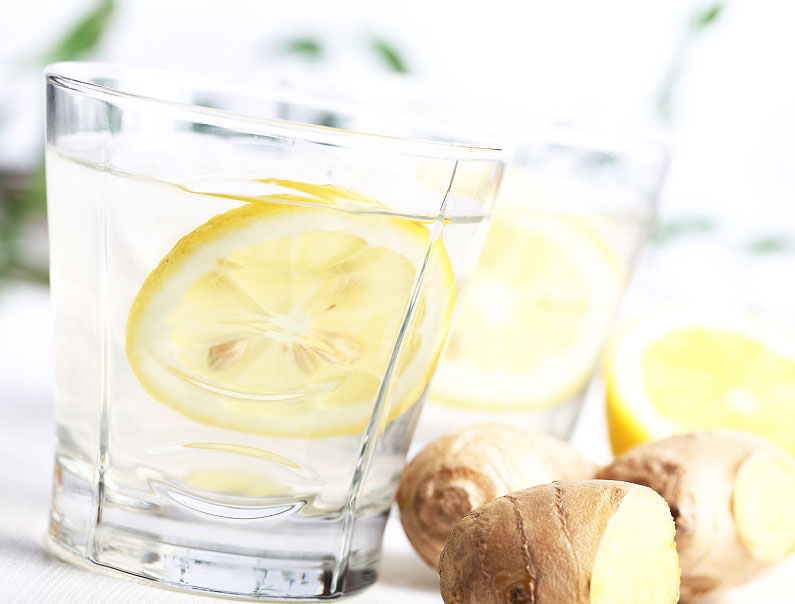
Lemons
Contains an important chemical which assists in the breakdown of gallstones. Also contains pectin, a soluble form of fibre which is good for bowel health (prevents constipation) and lowers blood cholesterol. A good source of vitamin C too
Artichoke
Helps reduce cholesterol and other fats in the blood. Improves the detoxification, repair and regeneration capacity of the liver. Also protects against liver damage
Apples & Oranges
Both contain pectin which prevents constipation. Also helps reduce cholesterol in the blood. Apple contains a host of important nutrients incl. antioxidants which can help protect against cancer. Oranges are a good source of vitamin C
Brussels sprouts
Part of the brassica family (other examples are cabbages, turnips, broccoli, cauliflower and swedes so helps in the detoxification processes of the liver. Increases oestrogen metabolism and excretion so thought to confer protection against some of the oestrogen-dependent cancers, particularly breast and uterine cancer
Grapes
Excellent for preventing heart disease (contains important chemicals called proanthocyanidins) which are also antioxidants so will help prevent cancer as well
Cabbage & turnip
Cabbage, one of the oldest of the brassicas, and the ancestor of broccoli and cauliflower. Cabbage, like other brassicas, is high in sulphur, so excellent for liver health. Helps in the detoxification processes and confers protection against cancer through its antioxidant activity. Similar benefits from consuming turnips but both the leaves and root need to be eaten.
Pineapple & Papaya
Both contain naturally-occurring enzymes that help breakdown protein from food so will help digestion. Also contains cancer preventing antioxidants
Broccoli
Broccoli, another popular member of the brassica clan has similar benefits to the liver
Grapefruit
Contains important nutrients, antioxidants and pectin. A key player in liver detox reactions
Leeks
Highly nutritious and contains key antioxidants such as the bioflavonoids. Also contains sulphur compounds which assist in the detoxification role of the liver
Berries esp dark red, blue or black
Contain high levels of proanthocyanidins and bioflavonoids that help protect against major diseases like heart disease and cancer also contains other important nutrients such as vitamin C and carotenes (both have antioxidant properties)
Watercress
Rich in the antioxidant beta-carotene. Also contains sulphur. Both are excellent for the liver

Excerpts from the book:
Title: Modern Living, Holistic Health & Herbal Medicine – improving health & well-being with herbs and lifestyle changes Author: Yaso Shan Contributions from: Dr. Catherine Whitlock; PhD Foreword: Miss Jenny Seagrove
Date of Publication: 2011 Publishers: Booklocker Inc.
http://www.amazon.co.uk/Books-Yaso-Shan/s?ie=UTF8&page=1&rh=n%3A266239%2Cp_27%3AYaso%20Shan 

Tuesday, 2 February 2016

The benefits of essential oils for depression in the winter months

Feeling unusually sad is not uncommon in the winter months. Classic (winter based) seasonal affective disorder (SAD) is a mood disorder, affecting people with otherwise normal mental health. Symptoms include difficulty waking up in the morning, nausea, tendency to oversleep and overeat, cravings for carbohydrates, lack of energy, difficulty concentrating or completing tasks, withdrawal from friends, family and social activities and decreased sex drive. While sharing many symptoms with clinical depression, the main distinguishing factor of SAD is its seasonal character.

Neurotransmitters
There is likely not a single cause for SAD but scientists have identified several physiological suspects: serotonin, melatonin, dopamine and norepinephrine. SAD has been most strongly linked to reduced levels of serotonin, an important “feelgood” neurotransmitter. Since eating carbohydrates increases serotonin levels, this may explain the tendency to binge on carbs. However, even in the general population, postmortem examination of the hypothalamus shows minimal serotonin in the months of December and January, suggesting that this is not sufficient in itself to cause SAD (Gupta 2013, Levitan 2007).

Studies have shown that dopamine depletion causes a temporary worsening of symptoms in SAD patients. Dopamine is associated with “reward” pathways in the brain, and may also be linked to binge eating. Fatigue and lethargy in SAD are very likely associated with low levels of dopamine and also norepinephrine (Levitan 2007).

Melatonin is a hormone produced by the pineal gland when there is very little light, and it signals our body to sleep. And if we choose to ignore those signals (because falling asleep while driving or in a meeting for example may have negative consequences), our natural sleep rhythms may be thrown off balance. We naturally produce more melatonin in winter months.

Many species naturally decrease their activity during winter months, as food sources are diminished and there is not enough sunlight to go hunting for whatever is still available. Some animals, such as bears and hedgehogs, even choose total hibernation, sleeping through the winter months to awaken when sun is high and food abundant. We humans cannot afford such winter sleep indulgences, and so we need to fight the ramifications of ignoring our natural circadian rhythms (the inner clock that tells us to sleep when the sun goes down).

Common treatments for SAD include light therapy, vitamin D supplements and antidepressants. However, essential oils may also be of great service.

Essential oils
Studies on depression and the sense of smell show that clinical depression is associated with reduced olfactory sensitivity (Negoias et al 2010, Schablitzky and Pause 2014). However, this may not apply to SAD, where researchers find the opposite – an increased olfactory sensitivity, especially in the right nostril, which corresponds to the right side of the brain (Postolache et al 1999). This increased sensitivity suggests that people with SAD may be especially responsive to aromatherapy.

It has long been claimed by aromatherapists that essential oils can positively affect mood, and scientific studies are now providing significant evidence for such effects, as well as explanations of how they work. Inhalation is a very efficient mode of administration for affecting neurological function, as the smell receptor sites in our nasal cavity have a direct link to the brain, via the olfactory bulbs.

In a 2013 article, researchers at Xiamen University, China, commented: “Most studies, as well as clinically applied experience, have indicated that various essential oils, such as lavender, lemon and bergamot can help to relieve stress, anxiety, depression and other mood disorders. Most notably, inhalation of essential oils can communicate signals to the olfactory system and stimulate the brain to exert neurotransmitters (e.g. serotonin and dopamine) thereby further regulating mood.” http://www.ncbi.nlm.nih.gov/pubmed/23531112.

Many studies have found that vaporized citrus oils are particularly effective for mood enhancement. In one, a mixture of bergamot, orange and lemon (with lemon predominating) was slowly vaporized throughout the day over a two-week period, and depressed patients exposed to this fragrance were able to reduce their dose of antidepressants (Komori et al 1995).

Bergamot and lemon oils are among the most widely-researched for positive effects on mood. Rodent studies show that lemon oil is antidepressant (Komori et al 1995) and invigorating (Komori et al 2006). It also reduces anxiety and boosts both serotonin and dopamine (Komiya et al 2006), two neurochemicals that are often reduced in SAD. In addition to lemon oil, other essential oils that positively impact dopamine and/or serotonin, and are also antidepressant, include clary sage, Atlas cedarwood, eucalyptus globulus and orange (Costa et al 2013, Kako et al 2008, Martins et al 2015, Seol et al 2010).

The citrus oil that has been most widely researched for mood effects in humans is bergamot. Bergamot oil inhalation, from diffusion or water-based sprays, has shown significant effects in the following conditions:

* Reduction of work-related stress in a total of 83 elementary school teachers (Chang & Shen 2011, Liu et al 2013).

* Reduction of anxiety in 53 patients awaiting surgery, compared to 49 control patients (Ni et al 2013)

* Reduction of stress hormone cortisol, along with reduction in self-reported fatigue and anxiety in 41 healthy women, within 15 minutes (Watanabe et al 2015).

* Changes in heart rate variability that indicate relaxation in 25 healthy females compared to 22 controls, within 15 minutes (Peng et al 2009).

Many other essential oils are said to be uplifting – some of these are more stimulating, and some are more calming (see below). However, note that a “relaxed alertness” is also described for some essential oils, as is as an antidepressant effect.

Stimulating oils


Black pepper
Black pepper is the only essential oil that has been shown to significantly increase epinephrine levels on inhalation (Haze et al 2002) and so might be useful where lethargy is a problem, but perhaps not if anxiety is high.

Grapefruit
In healthy adults, inhaled grapefruit oil was stimulating and invigorating, increasing the activity of the sympathetic nervous system by 50%, and causing a slight increase in skin temperature (Haze et al 2002). Grapefruit oil inhalation slightly increased epinephrine and norepinephrine levels. The effect was not statistically significant, but it may reveal a tendency (Haze et al 2002).

Jasmine
Jasmine absolute is widely regarded as an antidepressant. Vaporized jasmine absolute had a stimulating effect on the autonomic nervous system, resulting in greater blood oxygen saturation and increased alertness and perceived vigor (Sayowan et al 2013).

Lemon
Rodent studies show that lemon oil is antidepressant and invigorating (Komori et al 1995, Komori et al 2006). It reduces anxiety and boosts both serotonin and dopamine (Komiya et al 2006).

Rosemary
A proven essential oil for those who have difficulty concentrating (Moss & Oliver 2003, Moss et al 2003), rosemary oil also acts on serotonin receptors (Martinez et al 2009). Also see Rosemary Boosts Brain Power.

Calming oils

Bergamot
Bergamot was a key ingredient in the original Eau de Cologne, which was said to have restorative and refreshing properties. According to the research (cited above), inhaled bergamot oil reduces anxiety and stress, and correspondingly causes slight reductions in blood pressure and heart rate.

Clary sage
Clary sage oil increases both dopamine and serotonin levels, and these effects are thought to explain its notable antidepressant action (Lee et al 2014, Seol et al 2010).

Orange
Research on orange oil demonstrates that it is calming, reduces anxiety and heart rate, and improves mood (Goes et al 2012, Jafarzadeh et al 2013, Lehrner et al 2005). Orange oil does increase serotonin levels (Costa et al 2013).

Rose
Inhalation of rose essential oil resulted in a 30% decrease of epinephrine levels (Haze et al 2002). So this would be an appropriate essential oil for extreme stress, but not for extreme lethargy. Prolonged inhalation of rose oil (24 hours) by gerbils revealed an anti-anxiety effect that was described as being similar to “some serotonergic agents” (i.e. substances that increase serotonin) (Bradley et al 2007).

Sandalwood
Traditionally, Buddhists used sandalwood oil as a therapy for anxiety, depression and insomnia, while Tibetan Monks used it to relax the body and focus the mind. Research reveals that inhaled sandalwood oil is calming, while improving mood and increasing attentiveness (Heuberger et al 2006).

Cautions & Conclusions
Not everyone should take substances that increase serotonin. In particular, drug interactions are possible. Be aware that a few essential oils, if taken with for example SSRI drugs, could possibly lead to serotonin syndrome, such as I reported here [Interaction with SSRI medication] almost certainly due to blue (German) chamomile oil.

If you have chosen an oil or blend that fits you the best, I recommend using a diffuser with intermittent setting and diffusing oils in intervals of 30 to 60 minutes and then stopping for at least the same amount of time for the greatest therapeutic benefit. This way the nervous system does not habituate or adapt to the olfactory stimulus. And, it’s safer. In a day, 2-3 sessions are usually adequate. If diluted essential oils are being worn as fragrance, body oil etc., these limits won’t apply.

So, get those diffusers and inhalers ready, because the winter still has a long way to go and even if you are not suffering from SAD we can all use some uplifting now and again, especially when the temperatures drop into single digits and blizzards roar outside.

Reference: http://rtisserand.wpengine.com/2016/01/essential-oils-and-seasonal-affective-disorder/
Bradley, B., Starkey, N., Brown, S., & Lea, R. (2007). The effects of prolonged rose odor inhalation in two animal models of anxiety. Physiology & Behavior, 92, 931–938.
Chang, K.-M., & Shen, C.-W. (2011). Aromatherapy benefits autonomic nervous system regulation for elementary school faculty in taiwan. Evidence-Based Complementary and Alternative Medicine?: eCAM, 2011, 1–7.
Costa, C., & Cury, T. (2013). Citrus aurantium L. essential oil exhibits anxiolytic-like activity mediated by 5-HT1A-receptors and reduces cholesterol after repeated oral treatment. BMC Complementary and Alternative Medicine, 42, 1–10.
Goes, T., & Antunes, F. (2012). Effect of sweet orange aroma on experimental anxiety in humans. The Journal of Alternative and Complementary Medicine, 18(8), 798–804.
Gupta, A., Sharma, P. K., Garg, V. K., Singh, a. K., & Mondal, S. C. (2013). Role of serotonin in seasonal affective disorder. European Review for Medical and Pharmacological Sciences, 17(1), 49–55.
Haze, S., Sakai, K., & Gozu, Y. (2002). Effects of fragrance inhalation on sympathetic activity in normal adults. The Japanese Journal of Pharmacology, 90(3), 247–253.
Heuberger, E., Hongratanaworakit, T., & Buchbauer, G. (2006). East Indian Sandalwood and?alpha-Santalol odor increase physiological and self-rated arousal in humans. Planta Medica, 72, 792–800.
Jafarzadeh, M., Arman, S., & Pour, F. (2013). Effect of aromatherapy with orange essential oil on salivary cortisol and pulse rate in children during dental treatment: A randomized controlled clinical trial. Advanced Biomedical Research, 2, 1–10.
Kako, H., Fukumoto, S., Kobayashi, Y., & Yokogoshi, H. (2008). Effects of direct exposure of green odour components on dopamine release from rat brain striatal slices and PC12 cells. Brain Research Bulletin, 75, 706–712.
Komiya, M., Takeuchi, T., & Harada, E. (2006). Lemon oil vapor causes an anti-stress effect via modulating the 5-HT and DA activities in mice. Behavioural Brain Research, 172, 240–249.
Komori, T., Fujiwara, R., & Tanida, M. (1995). Effects of citrus fragrance on immune function and depressive states. Neuroimmunomodulation, 2, 174–180.
Komori, T., Fujiwara, R., Tanida, M., & Nomura, J. (1995). Potential antidepressant effects of lemon odor in rats. European Neuropsychopharmacology, 5, 477–480.
Lee, K.B., Cho, E., & Kang, Y.S. (2014). Changes in 5-hydroxytryptamine and cortisol plasma levels in menopausal women after inhalation of clary sage oil. Phytotherapy Research, 28(11), 1599–1605.
Lehrner, J., Marwinski, G., & Lehr, S. (2005). Ambient odors of orange and lavender reduce anxiety and improve mood in a dental office. Physiology & Behavior, 86, 92–95.
Levitan, R. D. (2007). The chronobiology and neurobiology of winter seasonal affective disorder. Dialogues in Clinical Neuroscience, 9(3), 315–324.
Liu, S., Lin, T., & Chang, K. (2013). The physical effects of aromatherapy in alleviating work-related stress on elementary school teachers in Taiwan. Evidence-Based Bomplementary and Alternative Medicine, 2013, 1–7.
Martinez, A., & Gonzalez-Trujano, M. (2013). Antinociceptive effect and GC/MS analysis of Rosmarinus officinalis L. essential oil from its aerial parts. Planta Medica, 75, 508–511.
Martins, D.F., Emer, A.A., Batisti, A.P. et al (2015). Inhalation of Cedrus atlantica essential oil alleviates pain behavior through activation of descending pain modulation pathways in a mouse model of postoperative pain. Journal of Ethnopharmacology, 175, 30–38.
Moss, M., Cook, J., Wesnes, K., & Duckett, P. (2003). Aromas of rosemary and lavender essential oils differentially affect cognition and mood in healthy adults. International Journal of Neuroscience, 113(1), 15–38.
Moss, M., & Oliver, L. (2012). Plasma 1,8-cineole correlates with cognitive performance following exposure to rosemary essential oil aroma. Therapeutic Advances in Psychopharmacology, 2(3), 103–113.
Negoias, S., Croy, I., Gerber, J., Puschmann, S., Petrowski, K., Joraschky, P., & Hummel, T. (2010). Reduced olfactory bulb volume and olfactory sensitivity in patients with acute major depression. Neuroscience, 169(1), 415–421.
Ni, C., Hou, W., Kao, C., & Chang, M. (2013). The anxiolytic effect of aromatherapy on patients awaiting ambulatory surgery: a randomized controlled trial. Evidence-Based Complementary and Alternative Medicine, 2013, 1–5.
Peng, S., Koo, M., & Yu, Z. (2009). Effects of music and essential oil inhalation on cardiac autonomic balance in healthy individuals. The Journal of Alternative and Complementary Medicine, 15(1), 53–57.
Postolache, T.T., Doty, R.L., Wehr, T.A. et al (1999). Monorhinal odor identification and depression scores in patients with seasonal affective disorder. Journal of Affective Disorders, 56(1), 27–35.
Postolache, T.T., Wehr, T.A., Doty, R.L. et al (2002). Patients with seasonal affective disorder have lower odor detection thresholds than control subjects. Archives of General Psychiatry, 59(12), 1119–1122.
Sayowan, W., Siripornpanich, V., Hongratanaworakit, T. et al (2013). The effects of jasmine oil inhalation on brain wave activies and emotions. Journal of Health Research, 27(2), 73–77.
Schablitzky, S., & Pause, B. M. (2014). Sadness might isolate you in a non-smelling world: olfactory perception and depression. Frontiers in Psychology, 5(45).
Seol, G., Shim, H., Kim, P., & Moon, H. (2010). Antidepressant-like effect of Salvia sclarea is explained by modulation of dopamine activities in rats. Journal of Ethnopharmacology, 130(1), 187–190.
Watanabe, E., Kimura, M., & Rauwald, W. (2015). Effects of Bergamot (Citrus bergamia (Risso) Wright & Arn.) essential oil aromatherapy on mood states, parasympathetic nervous system activity, and salivary cortisol levels in 41 healthy females. Forschende Komplementärmedizin, 22, 43–49